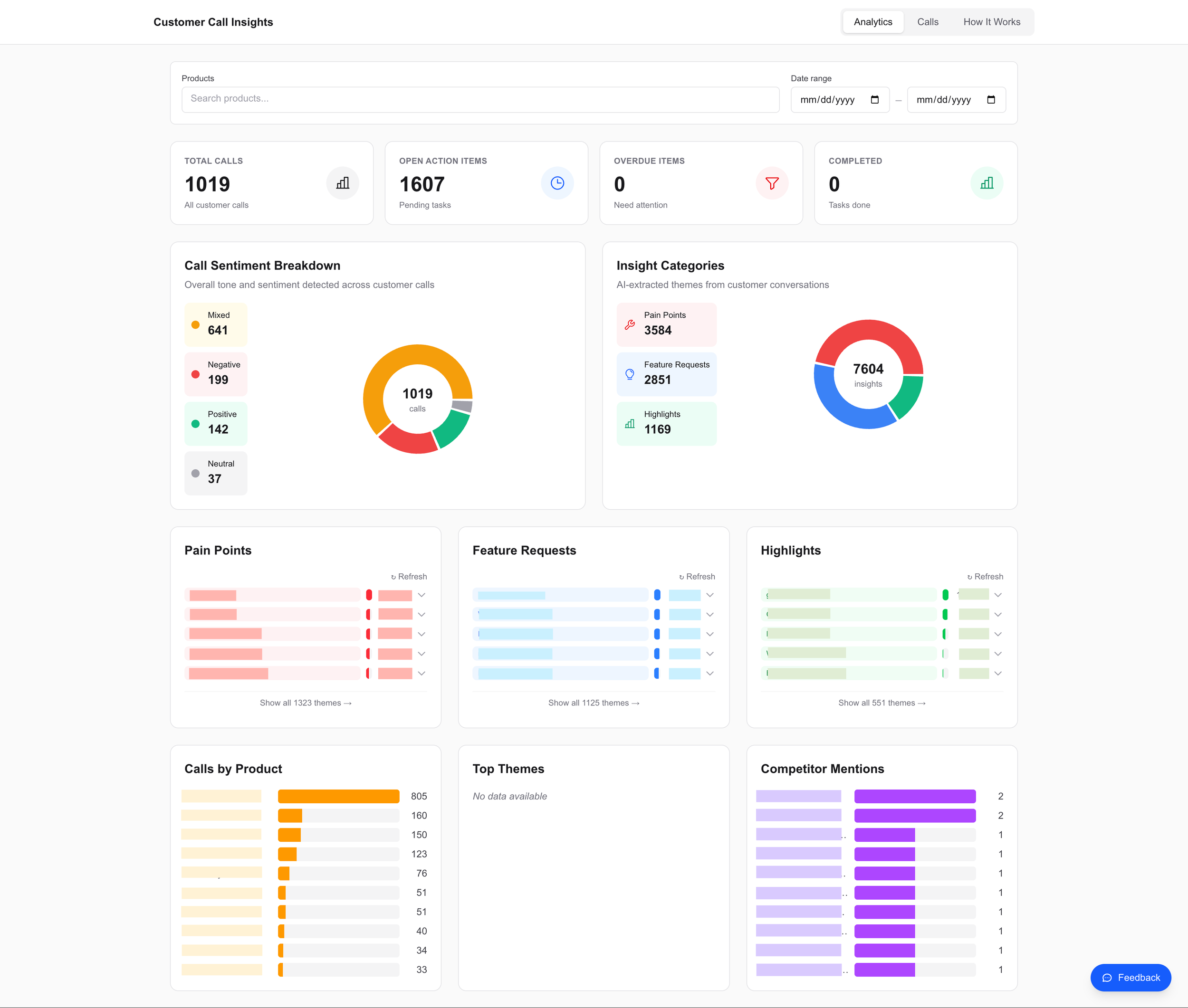
Product Insight Repository
Thousands of insights presented in a simple dashboard
The challenge: Improve the PM workflow using AI-driven insights
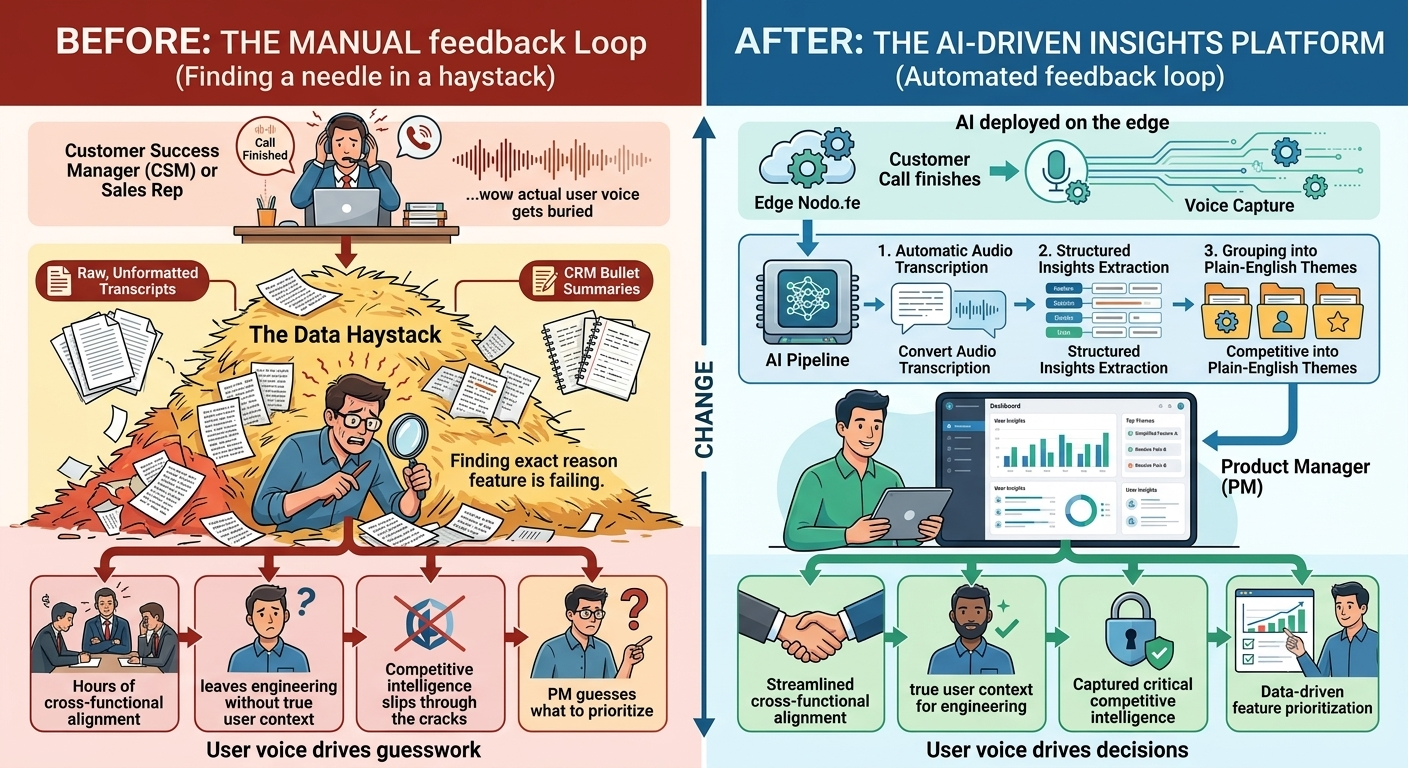
The Problem (The "Before")
When a Customer Success Manager or Sales Rep finishes a call, the actual "voice of the customer" gets buried. To extract pain points, Product Managers have to read through raw, unformatted transcripts or rely on bulleted summaries in a CRM (Jira and Gemini notes). Finding the exact reason why a feature is failing is like trying to find a needle in a haystack. It takes hours of cross-functional alignment, leaves engineering without true user context, and allows critical competitive intelligence to slip through the cracks.
The Solution (The "After") I was tasked with designing a platform that largely automates this feedback loop using Artificial Intelligence deployed on the edge. Instead of a PM manually reading transcripts to guess what features to prioritize, I designed an interface driven by an AI pipeline that automatically transcribes the audio, extracts structured insights, and groups them into plain-English themes. This dashboard would have easy access to insights and allow users to surface and understand their insights in a similar fashion to actionable dashboards on Qualtrics and Dovetail.

Background on Conversational Intelligence
Here are some terms and definitions to better understand the architecture of this tool:
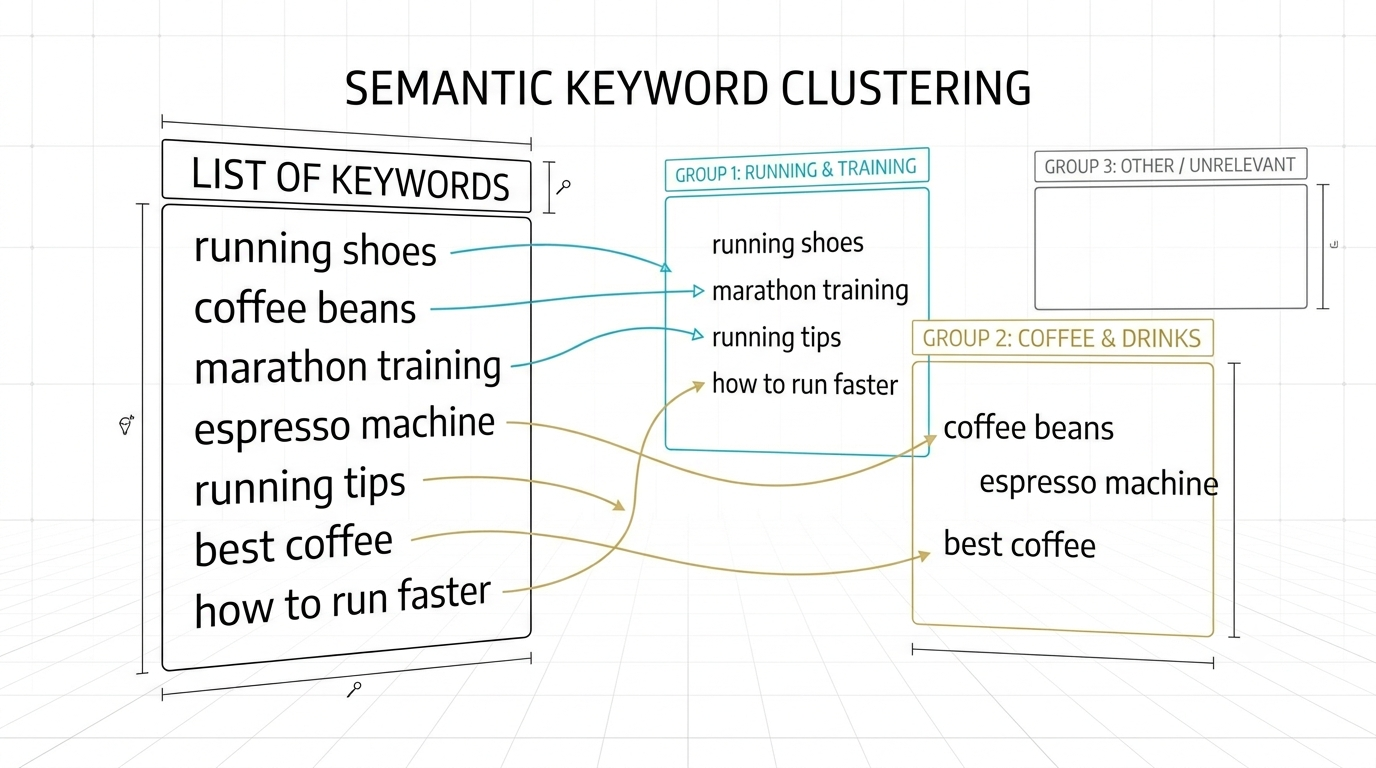
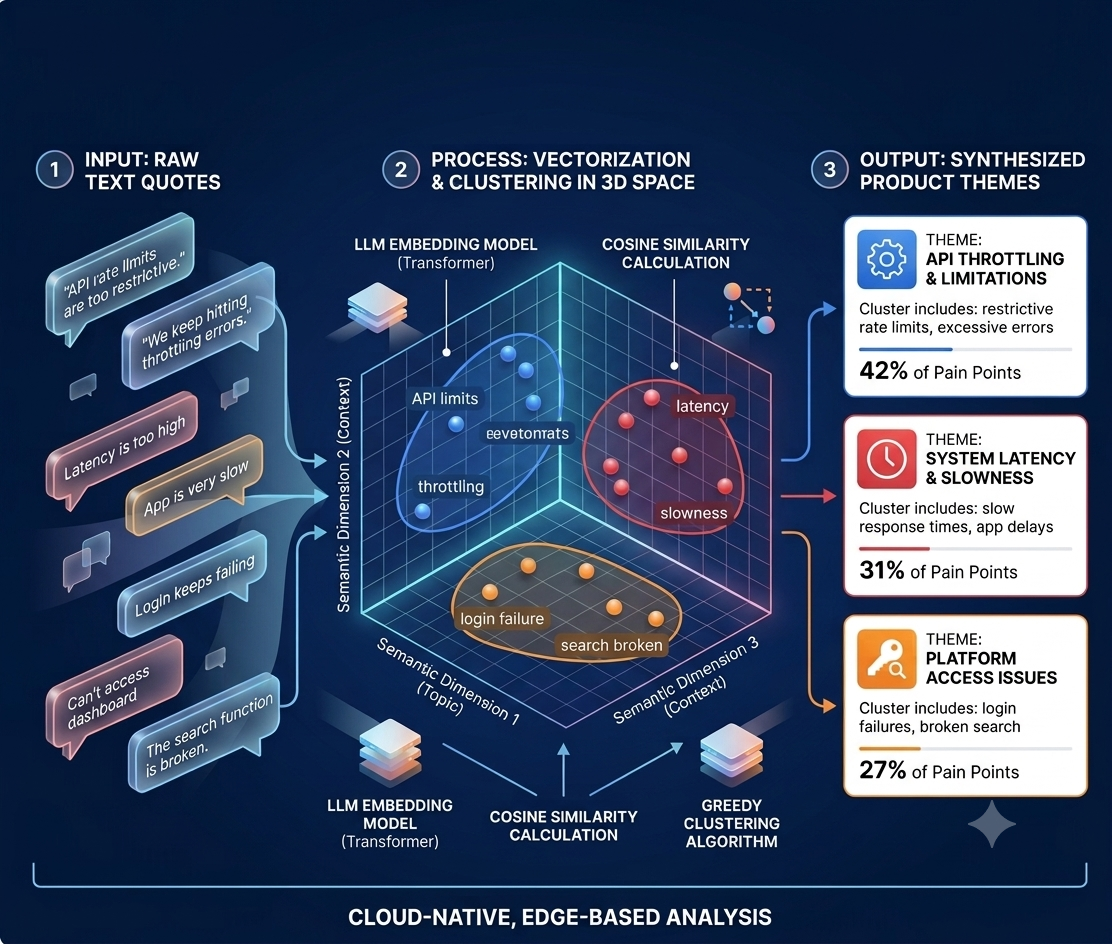
Semantic Clustering: A method of using AI (Vector Databases) to understand the meaning behind sentences, allowing the system to group things like "API limits are too restrictive" and "We keep hitting throttling errors" into the same bucket.
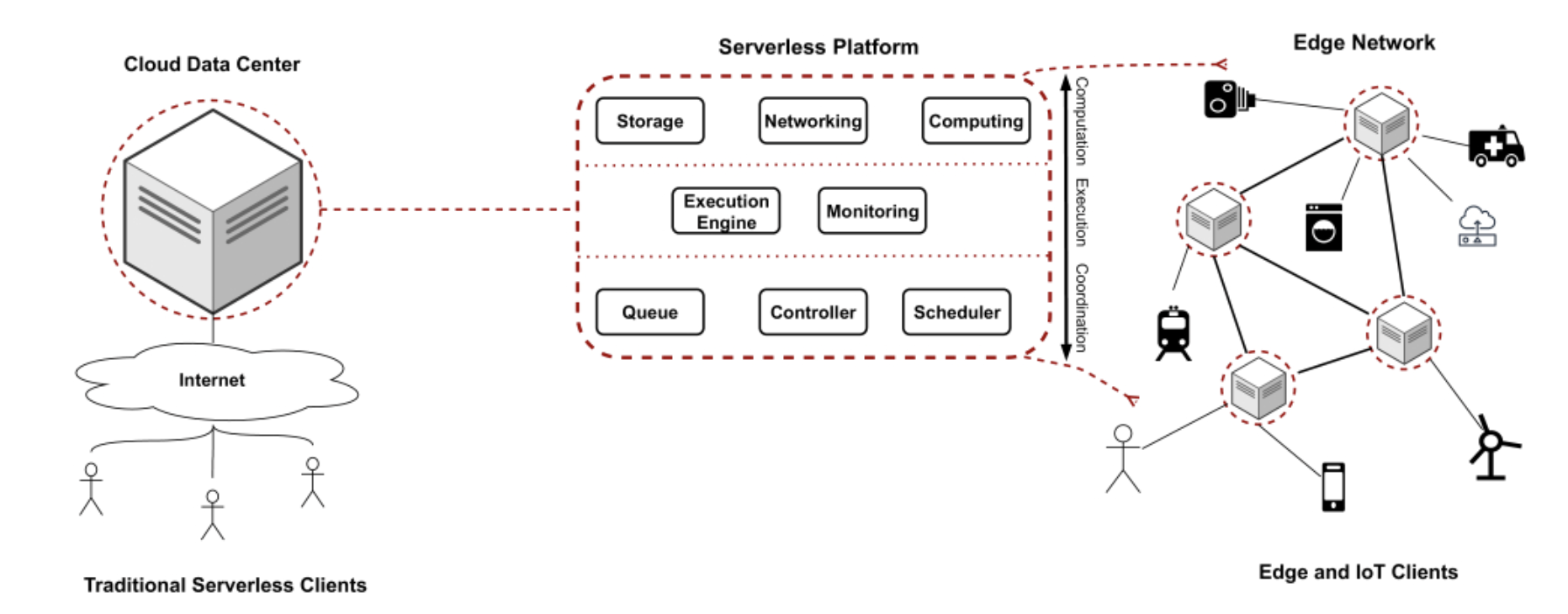
Serverless Edge: Instead of running heavy, centralized servers, the compute happens on distributed edge nodes close to the user, resulting in near-zero latency.
The goal of this project was to bridge the gap between unstructured conversational data and actionable product strategy. Instead of requiring Product Managers to manually parse through massive meeting recordings or rely on subjective sales notes to find feature requests, we integrated an edge-native AI layer to do the heavy lifting.
Conversational intelligence for data?
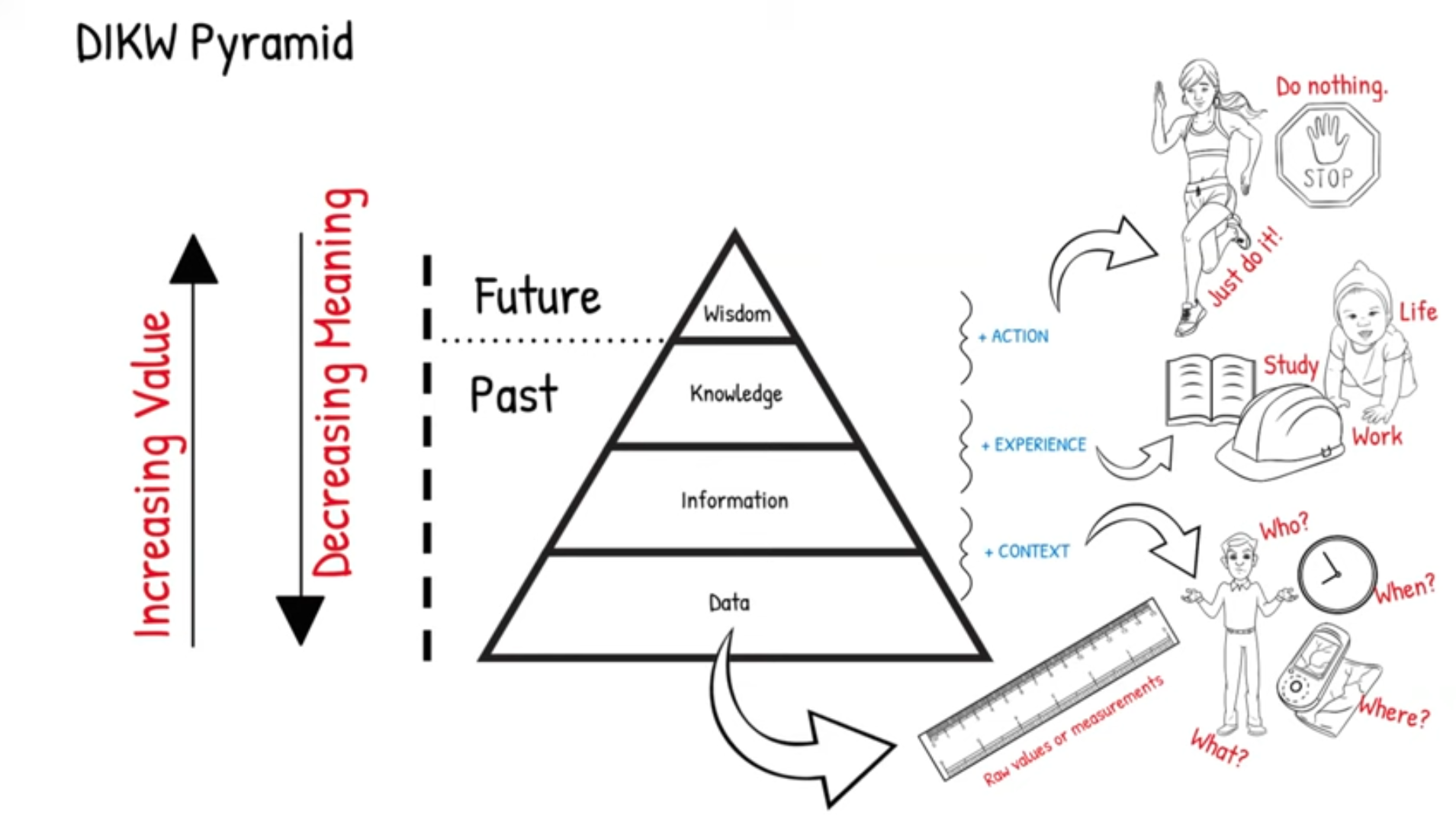
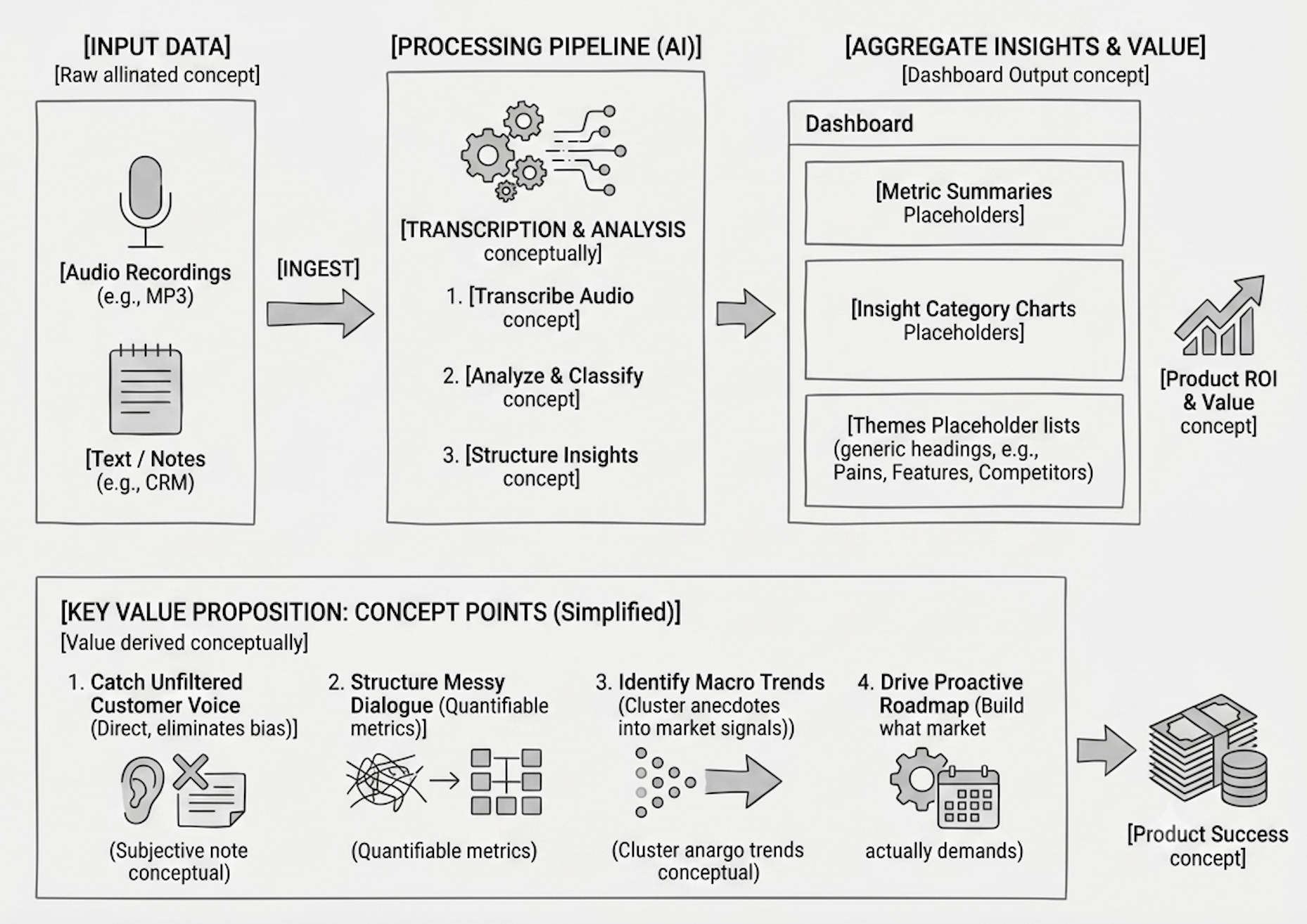
Human conversation is the richest, most accurate dataset a company has, but it is historically the most difficult to scale. Baring this in mind, converting human conversation into structured data is the ultimate product multiplier:
Eliminates human bias: It bypasses subjective CRM notes and captures the raw, unfiltered voice of the customer directly from the source.
Structures the unstructured: It transforms messy, hour-long audio transcripts into quantifiable, queryable metrics like feature requests and sentiment.
Reveals macro trends at scale: By semantically clustering thousands of disparate user quotes, it turns individual anecdotes into mathematically proven product signals.
Drives proactive strategy: Instead of reacting to churn or support tickets, teams can identify friction points in real-time and build exactly what the market actually demands.
User research and baseline feedback
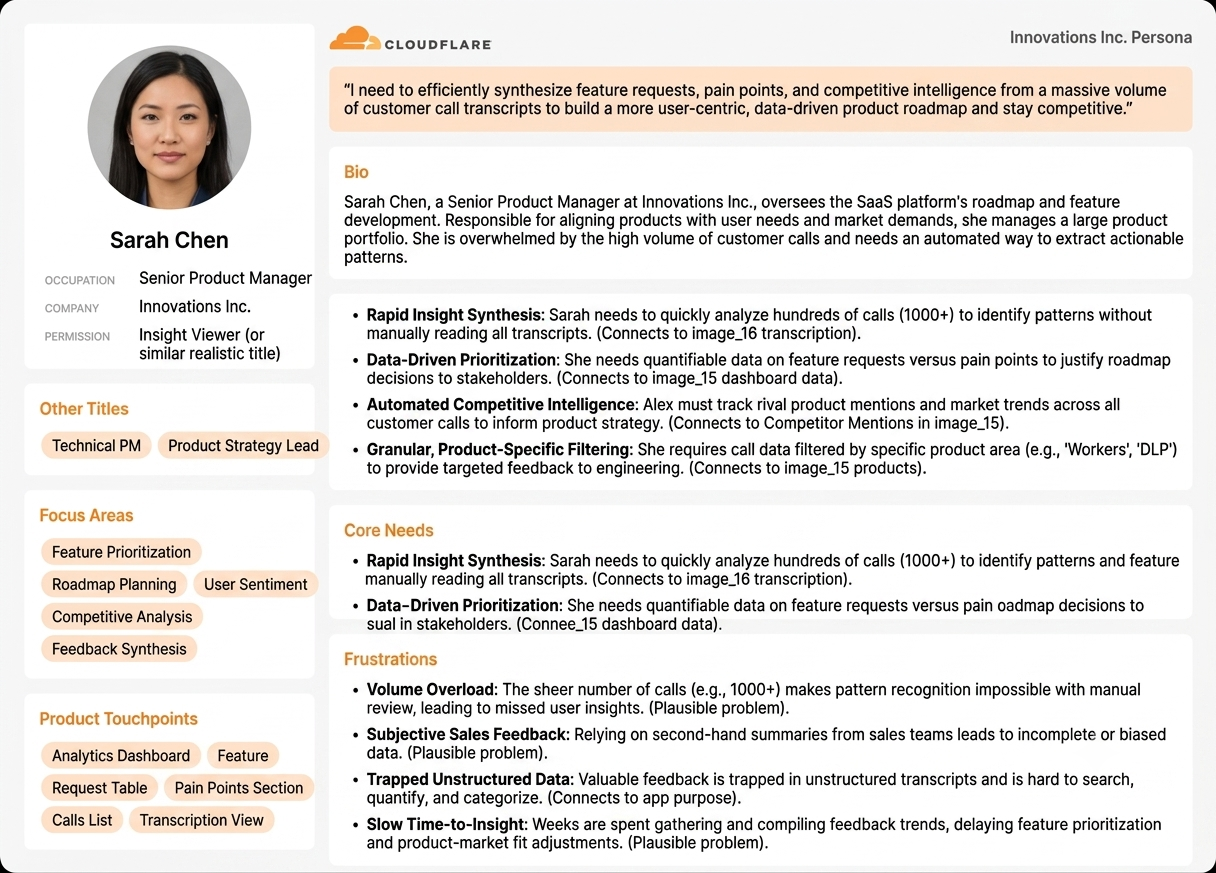
Deep diving into user personas (Product Managers, PMMs, and CS) surfaced multiple pain points within existing feedback workflows, which included, but were not limited to:
Lack of aggregate visibility into recurring feature requests
Inability to search transcripts contextually based on sentiment
High friction in uploading and tagging calls manually
Lack of an automated process to track competitor mentions
Having documented these core detractors, I was ready to start conceptualizing what the “fixed” experience would be.
IA mapping and wireframes
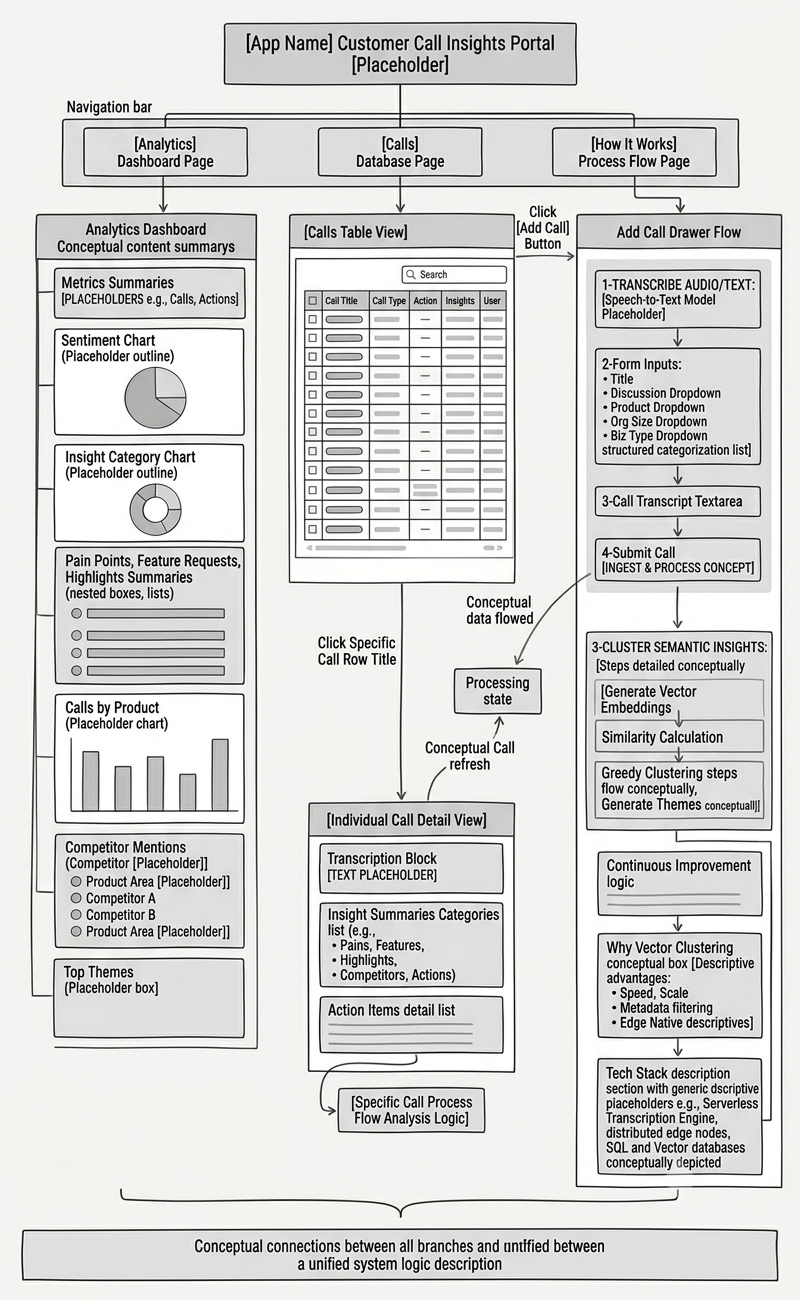
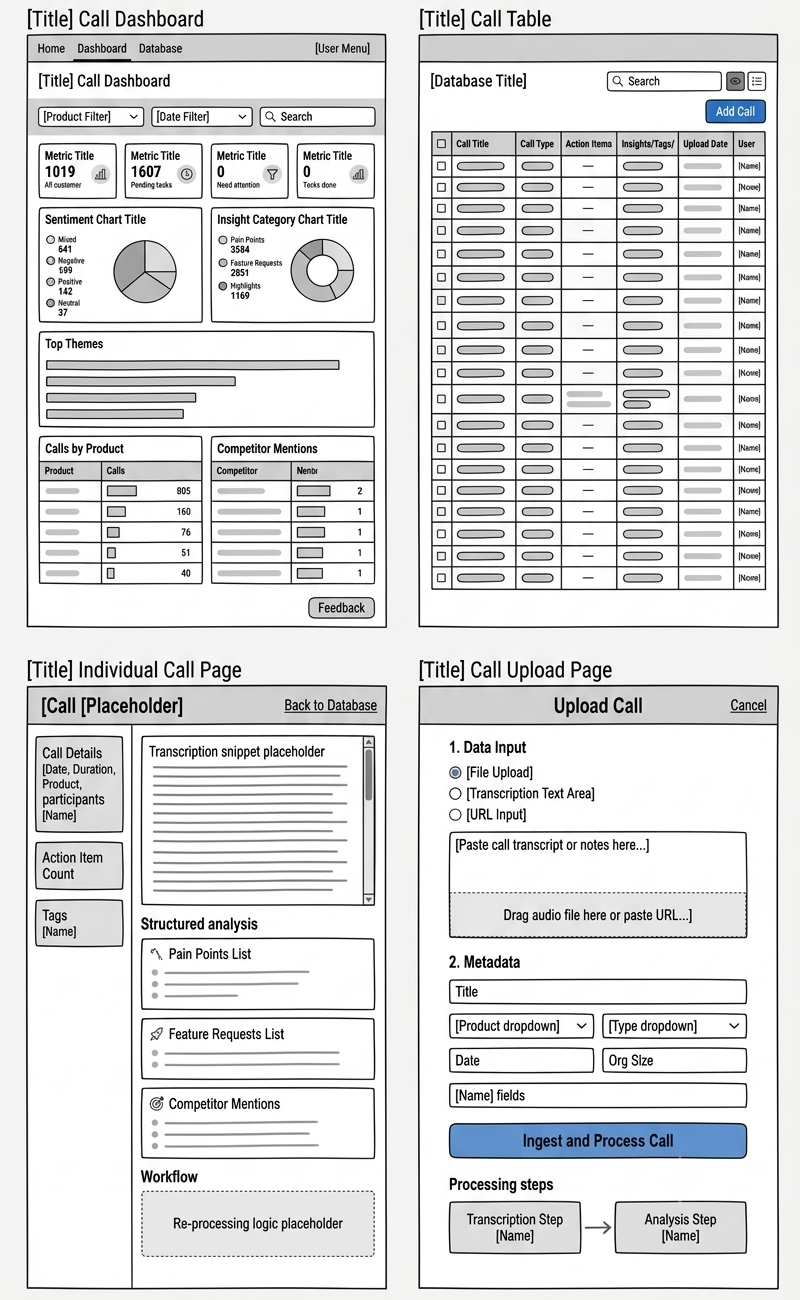
Using AI tools like Gemini and Windsurf, I was able to pre-generate UX dashboard wireframes by using our dataset structural schema and analytics dashboard competitors as grounding data.
Stripping out the aesthetic allowed a focus on functionality: How does a user upload a transcript? How do we categorize the discussion type? Solidifying the user flow allowed us to play with different data visualizations for the dashboard. This was especially valuable when discussing how to present semantic clusters in an understandable surface-level format. By remaining in concept, we could refine the specifications for the vector database and LLM prompts before writing the final front-end code.
AI extraction and Semantic Clustering
With this project heavily reliant on LLMs, the design needed to scale outwards and process thousands of data points seamlessly.
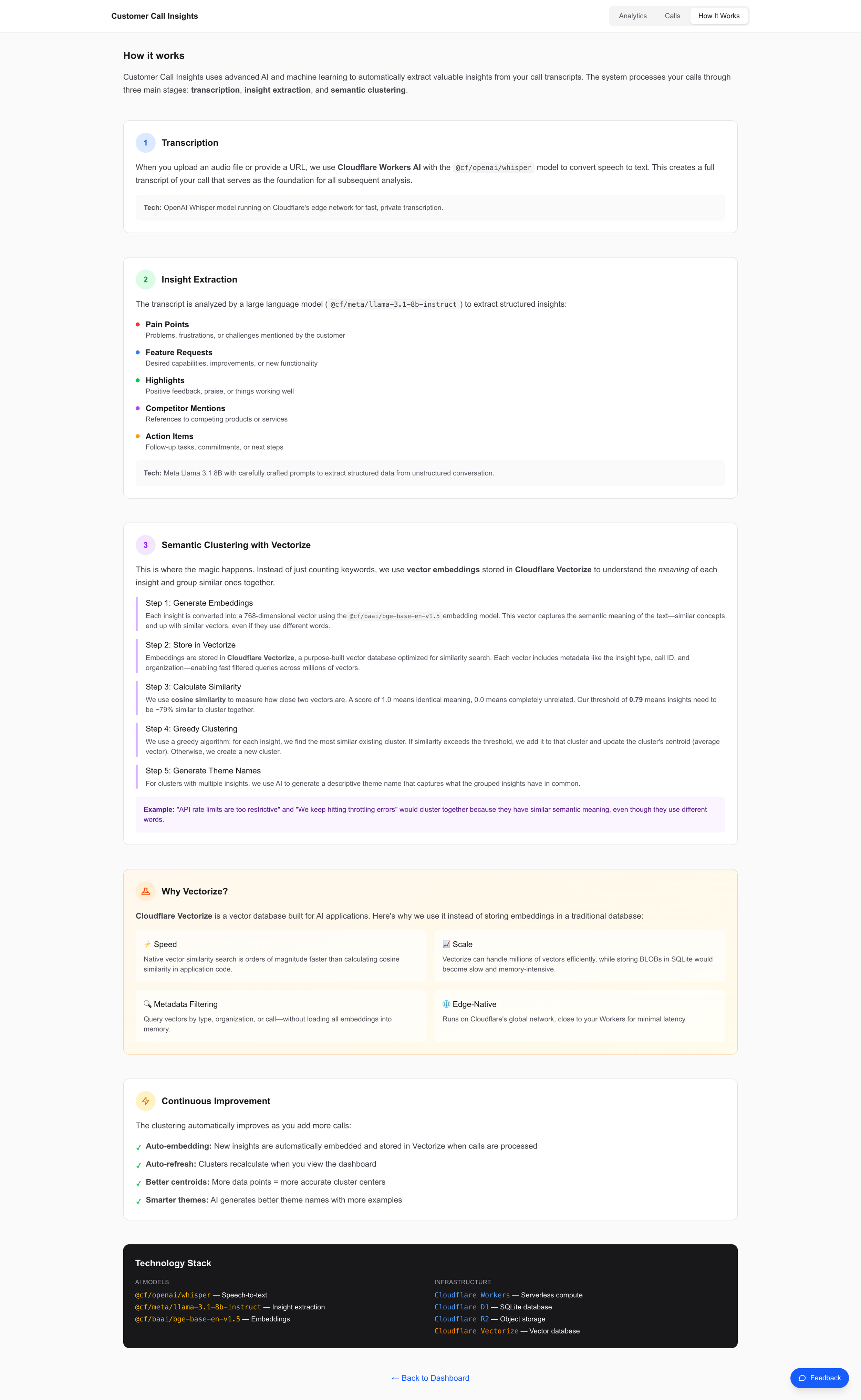
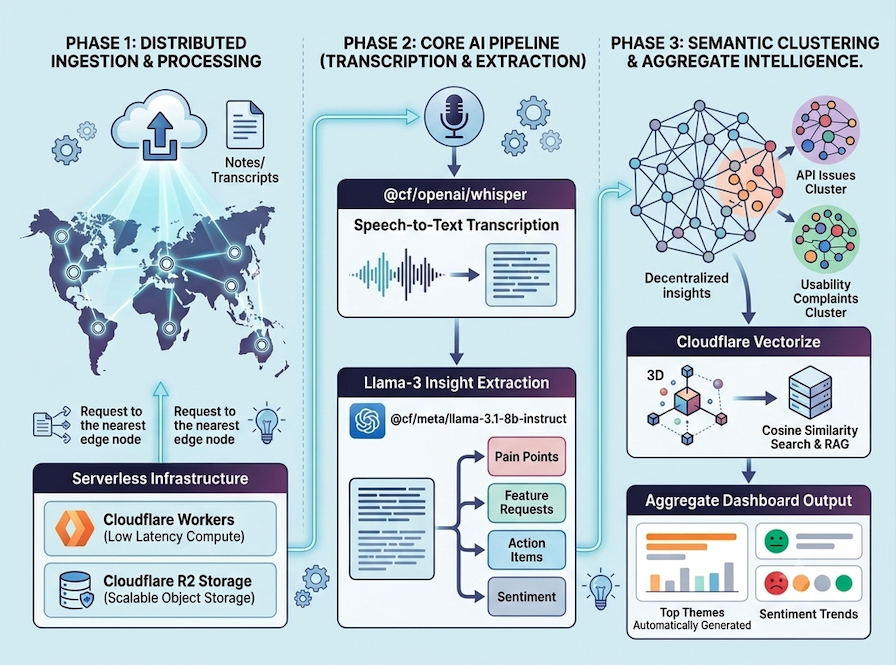
The architecture processes calls through three main stages:
Transcription: Utilizing Whisper models on the edge to convert speech to text instantly.
Insight Extraction: Using Llama-3 to scan the raw text and pull out structured data: Pain Points, Feature Requests, Highlights, and Action Items.
Semantic Clustering: Using Vector Embeddings to mathematically measure how close two insights are in meaning.
Additionally, we needed the UI to reflect continuous improvement. As users upload more calls, the data points auto-refresh, generating more accurate cluster centers and smarter, AI-generated theme names based on the aggregated data.
Design implementation
Once the conceptual logic was validated, the focus shifted to high-fidelity designs. The core emphasis of implementation was translating a highly complex AI pipeline into a digestible, consumer-grade UI.
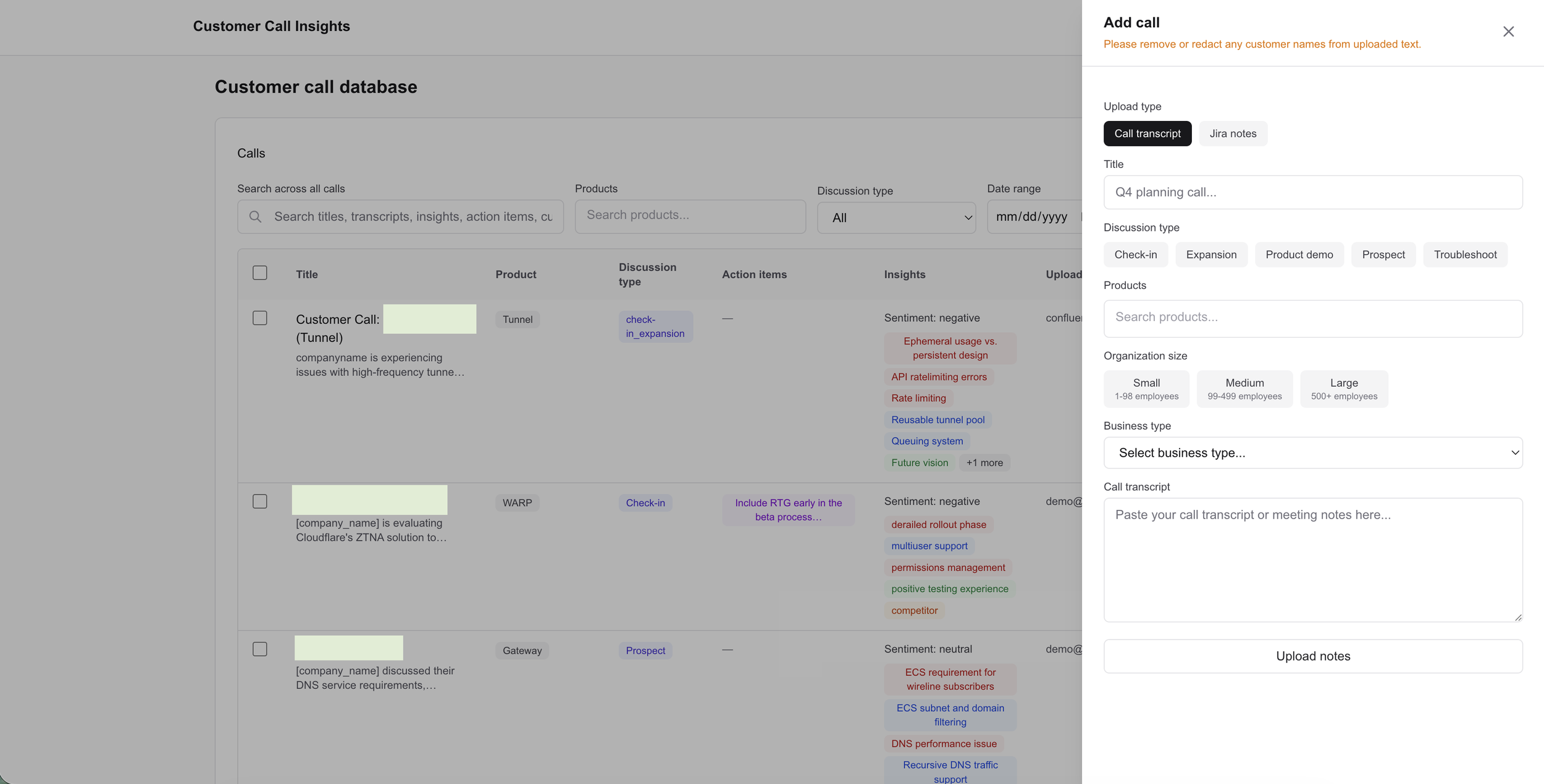
The Upload Flow: Designed a frictionless drawer interface that allows users to paste transcripts or notes, define the product area, and set the organizational context before running the AI extraction.
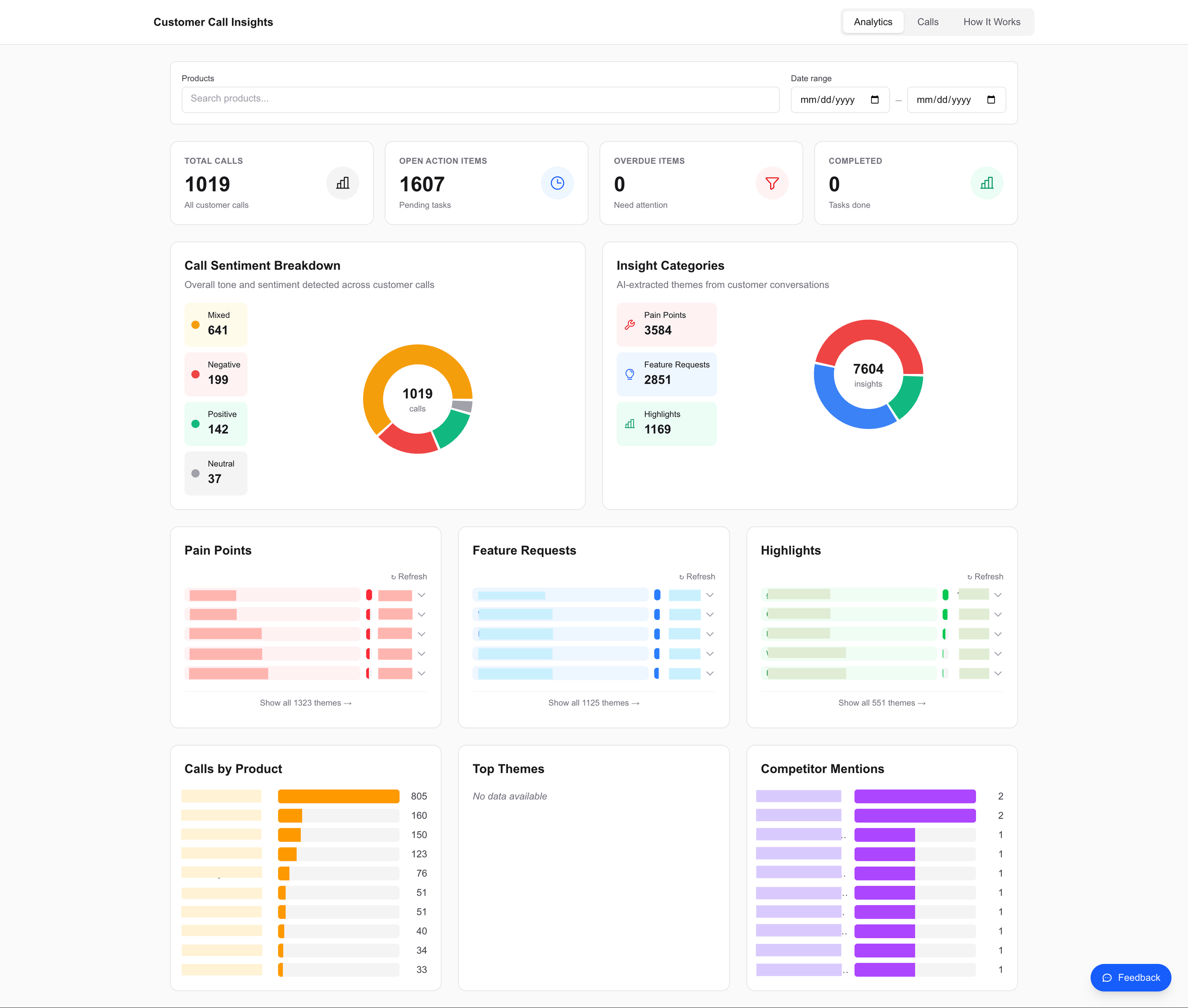
Categorized Insights Matrix: Instead of just summarizing a call, the dashboard breaks down extractions into distinct UI modules: Pain Points (red), Feature Requests (blue), and Highlights (green).
Competitor Tracking: A dedicated component visualizing mentions of rival products across all calls, providing immediate value to Product Marketing teams.
"AI needs to know what it's looking for": By utilizing strict UI taxonomies—filtering by Product, Organization Size, and Discussion Type—we pass tighter context to the LLM, narrowing its focus and preventing hallucinations.
Outcome and summary
In short, we turned conversational noise into “product signals,” significantly reducing the time it takes to identify market needs:
Before: PMs had to manually read CRM notes, search for keywords, and build their own spreadsheets to track feature requests.
After: The dashboard surfaces a natural language theme (e.g., "API rate limits are too restrictive") backed by data from dozens of calls across the organization.
Other impacts include:
Edge-Native Speed: By leveraging serverless compute and vector databases, the UI processes and clusters insights with near-zero latency compared to traditional centralized servers.
Action Item Tracking: Created a dedicated workflow for Customer Success to track "Open Action Items" directly from transcripts, reducing account churn risk.
Information Architecture: Streamlined the path for Product Managers. The flow moves from a high-level aggregate view of 1,000+ calls down to the specific user quote driving a feature request—all within a few clicks.
Primary Job Performers: Identified the specific needs of cross-functional teams who need to solve "What should we build next?" The AI acts as a product operations analyst, triaging feedback before the PM even sees it.